Goals and responsibilities:
Uveitis Fellowship is intended to train competent ophthalmologists in the comprehensive evaluation and management of patients with infectious and non-infectious uveitis and other ocular inflammatory disorders. The fellowship aims to develop advanced clinical, diagnostic, therapeutic, and research competencies that enable fellows to provide evidence-based, patient-centred care.
At the end of the fellowship, the fellow should be able to:
- Demonstrate proficiency in the diagnosis and differential diagnosis of intraocular inflammatory disorders through comprehensive history taking, clinical examination, and appropriate use of ancillary investigations.
- Develop expertise in the medical management of infectious and non-infectious uveitis using topical, regional, and systemic therapies, including corticosteroids, immunomodulatory agents, biologic therapies, and antimicrobial drugs, as appropriate
- Recognize and manage ocular and systemic complications associated with uveitis and its treatment.
- Understand the immunological basis, pathogenesis, and classification of ocular inflammatory diseases and apply this knowledge to clinical decision-making.
- Appropriately investigate and identify underlying infectious, autoimmune, and systemic inflammatory diseases associated with ocular inflammation through multidisciplinary collaboration.
- Understand the indications for and perioperative management of patients with ocular inflammatory disorders undergoing cataract, glaucoma, and vitreoretinal surgery.
- Develop competency in the interpretation of ophthalmic imaging and laboratory investigations relevant to uveitis, including fluorescein angiography, indocyanine green angiography, optical coherence tomography (OCT), ultrasonography, fundus autofluorescence, electrophysiological studies, and relevant laboratory and radiological investigations.
- Acquire skills in clinical research, critical appraisal of scientific literature, and evidence-based practice, enabling meaningful contributions to the field of ocular inflammation.
- Demonstrate professionalism, ethical practice, effective communication, and teamwork in the multidisciplinary management of patients with ocular inflammatory diseases.
- Engage in lifelong learning and continuous professional development to remain current with advances in uveitis and ocular immunology.
Requirements:
- Interest in Ocular inflammation /Uveitis/Immunology
- A sound knowledge of internal medicine is desirable.
- Capability to do indirect ophthalmoscopy
- Willingness to participate in research activities/ projects
Selection procedure: Through interview and written examination in Uvea
Rotational & Clinical Workflow: The Uveitis Fellowship is structured into four progressive
modules;
Months 1–2 (Module 1): Foundation and Diagnostic Skills
- Introduction to the principles of uveitis evaluation, including comprehensive history taking and detailed ocular examination.
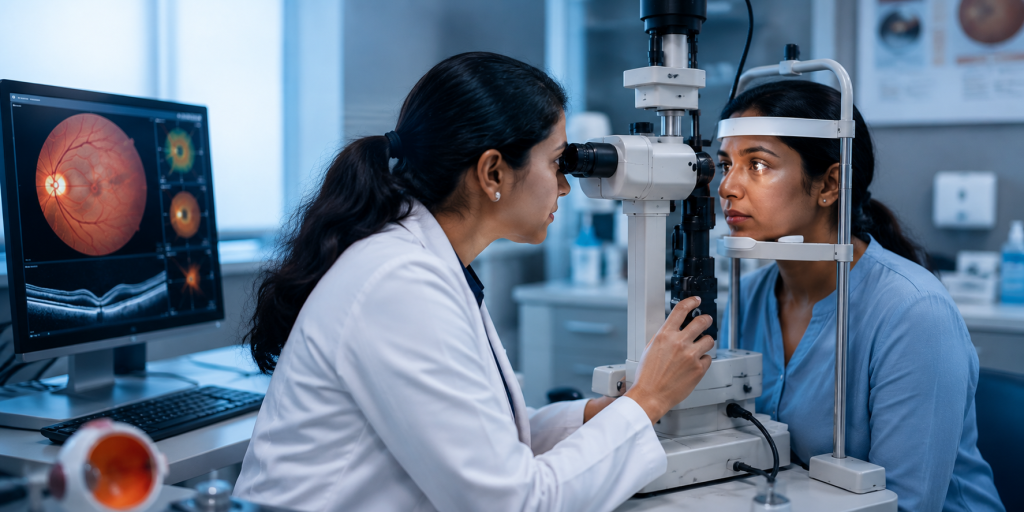
- Training in anterior and posterior segment examination techniques, including slit-lamp biomicroscopy, dilated fundus evaluation, indirect ophthalmoscopy, and assessment of inflammatory signs.
- Posting with Uveitis consultants in outpatient clinics for observation and supervised patient evaluation.
- Exposure to basic uveitis investigations and interpretation of laboratory and imaging findings.
- Introduction to ocular imaging modalities including OCT, fluorescein angiography, and ultrasonography.
Months 3-6 (Module 2): Guided Clinical Independence
- Rotational postings with Uveitis consultants to gain experience in the evaluation, diagnosis, and management of a wide spectrum of inflammatory disorders.
- Progressive responsibility in managing anterior, intermediate, posterior, and panuveitis, scleritis, and retinal vasculitis under supervision.
- Independent interpretation of multimodal imaging and diagnostic investigations relevant to uveitis.
- Training in medical management, including the use of topical, periocular, and systemic corticosteroids, immunosuppressive therapies, and antimicrobial treatment.
- Exposure to procedures including periocular and intraocular therapies under supervision.
- Participation in emergency evaluation and management of acute inflammatory and infectious ocular conditions.
Months 7-9 (Module 3): Advanced Clinical Management and Research
- Management of complex uveitis cases, including infectious uveitis, autoimmune ocular inflammation, masquerade syndromes, and systemic inflammatory disorders.
- Advanced training in immunomodulatory therapy, biologic agents, and long-term disease monitoring.
- Perioperative evaluation and management of patients with ocular inflammation undergoing cataract, glaucoma, and vitreoretinal procedures.
- Completion and review of research projects with training in data analysis, manuscript preparation, and scientific writing.
Months 10-12 (Module 4): Transition to Independent Uveitis Practice
- Development of independent clinical decision-making skills in the diagnosis and management of complex ocular inflammatory disorders.
- Consolidation of skills in comprehensive patient care, treatment planning, and followup strategies.
- Completion and submission of research work for presentation and/or publication.
- Final clinical and academic assessments.
- Participation in teaching and mentoring junior trainees to develop academic and leadership skills
A logbook will be maintained throughout the fellowship to document clinical exposure, procedures performed, academic activities, and research work. The logbook must be submitted for review every month and duly verified and signed by the respective consultant.
Skills and Competencies Gained During the Uveitis Fellowship:
- Mastering the skills of using slit lamp biomicroscopy and indirect ophthalmoscopy
- Diagnosis and management of various retinal conditions related to posterior segment inflammation under supervision of a Uveitis specialist.
- Diagnosis and management of uveitis and uvea emergencies under supervision of uvea specialist.
- Management of TB/ HIV/AIDS related uveitis
- Understand the use of immunosuppressive agents in Uveitis
- Emergency Room posting to understand and deal with ocular emergencies
- Hands on experience in performing FFA, ICG, OCT, USG and electrodiagnostic modalities during the diagnostic postings and interpretation of these test results.
Last six months of senior residency with independent OPD posting, managing Uvea emergencies. The Uvea fellows will work as senior resident and manage uveitic cases independently.
Surgical exposure:
Fellows will be given sufficient opportunities for minor invasive procedures like posterior sub tenon injections, Diagnostic anterior chamber tap and intra vitreal injections.
Research possibilities:
Uvea fellows will get opportunities to work for publications in various journals. Fellows are expected to actively participate in all academic activities, including weekly Uveitis meetings with case presentations, Uveitis Grand Rounds, Journal Club, quizzes, CME programmes, and postgraduate teaching sessions. They are also encouraged to contribute to academic discussions and present clinical and research work at state (KSOS), national conferences (AIOS, USI). Periodic basic science and clinical assessments will be conducted throughout the fellowship, including written examinations every four months to evaluate the fellow's progress.