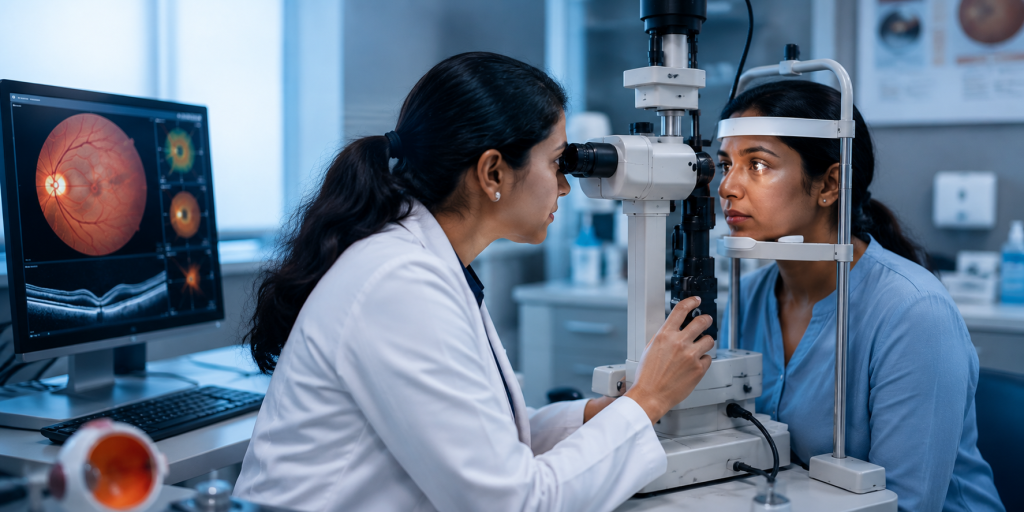
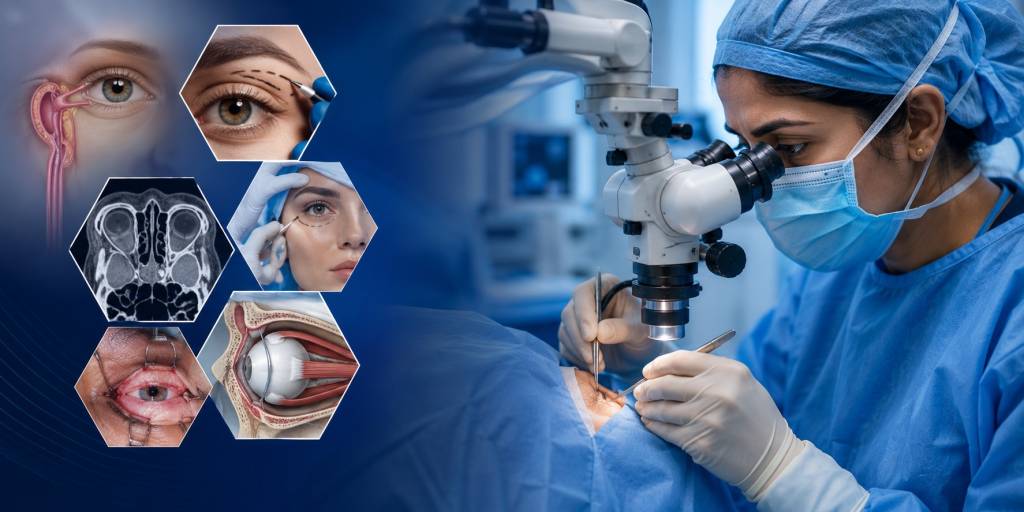
Year 1: Medical Retina, Diagnostics & Surgical Foundations
The first year heavily emphasizes diagnostic mastery, laser proficiency, and the foundational steps of vitreoretinal surgery.
Clinical Rotations:
- General Retina OPD: Comprehensive management of diabetic retinopathy, age-related macular degeneration (AMD), retinal vascular occlusions, and inherited retinal diseases.
- Uveitis & Ocular Immunology : Diagnosis and management of posterior segment inflammation
- Paediatric Retina & ROP: NICU rotations for Retinopathy of Prematurity (ROP) screening, staging, and paediatric retinal assessments.
Diagnostics Mastery:
- Independent performance and interpretation of Fundus Fluorescein Angiography (FFA), Indocyanine Green Angiography (ICG), OCT, OCTA, and B-scan Ultrasonography.
- Exposure to electrophysiological testing (ERG, EOG, VEP).
Minor Procedures & Lasers:
- High-volume intravitreal injections (anti-VEGF, steroids, antibiotics).
- Pan retinal photocoagulation (PRP), focal/grid lasers, and barrage lasers for retinal tears.
- Laser photocoagulation for ROP.
Surgical Foundations (Assisting & Basic Steps):
- Assisting senior faculty in major vitreoretinal surgeries to understand workflow and decision-making.
- Mastering basic surgical steps: 23G, 25G, and 27G port placement, core vitrectomy, and fluid-air exchange.
- Management of emergency ocular trauma and open globe injuries.
- Assisting in primary scleral buckling procedures.
Year 2: Advanced Surgical Retina & Independent Practice
The second year transitions the fellow from an assistant to a primary surgeon to a senior residency phase to build autonomous decision-making.
Advanced Pars Plana Vitrectomy (PPV) based on the proficiency and academic and surgical
growth:
- Primary Surgeon: Managing Rhegmatogenous retinal detachments (RRD), tractional retinal detachments (TRD), and vitreous haemorrhage.
- Macular Surgery: Epiretinal membrane (ERM) peeling and internal limiting membrane (ILM) peeling for macular holes depending on fellows’ skills
- Complex Cases: Assisting of complex diabetic vitrectomies, proliferative vitreoretinopathy (PVR), and severe ocular trauma
Scleral Buckling & Complex Anterior Segment:
- Assisting and partly performing primary scleral buckling using traditional and modern approaches.
- Management of dropped nucleus, retained lens fragments, and IOL drop into the vitreous.
Senior Residency Phase (Months 21–24):
- Fellows act as independent clinicians running their own OPDs, managing emergency postings, and operating with faculty available for backup
Academic & Research Requirements
A robust academic framework ensures fellows contribute to the broader ophthalmic community and stay current with technological advancements.
- Weekly Class: Mandatory participation in weekly OCT/FFA imaging rounds, grand rounds, and journal clubs and case and image presentations
- Specialty Modules: Grand rounds and Comprehensive ophthalmology classes once a week. Specialty classes are optional
- Research Project: o Learns Literature review, study design, and IRB/ethics submission, Patient recruitment, data collection, and analysis, Manuscript writing and submission to a peer-reviewed journal.
- Conferences: Submission and presentation of at least one paper or poster at major national or international conferences (e.g., KSOS, VRSI, AIOC,).