Aim
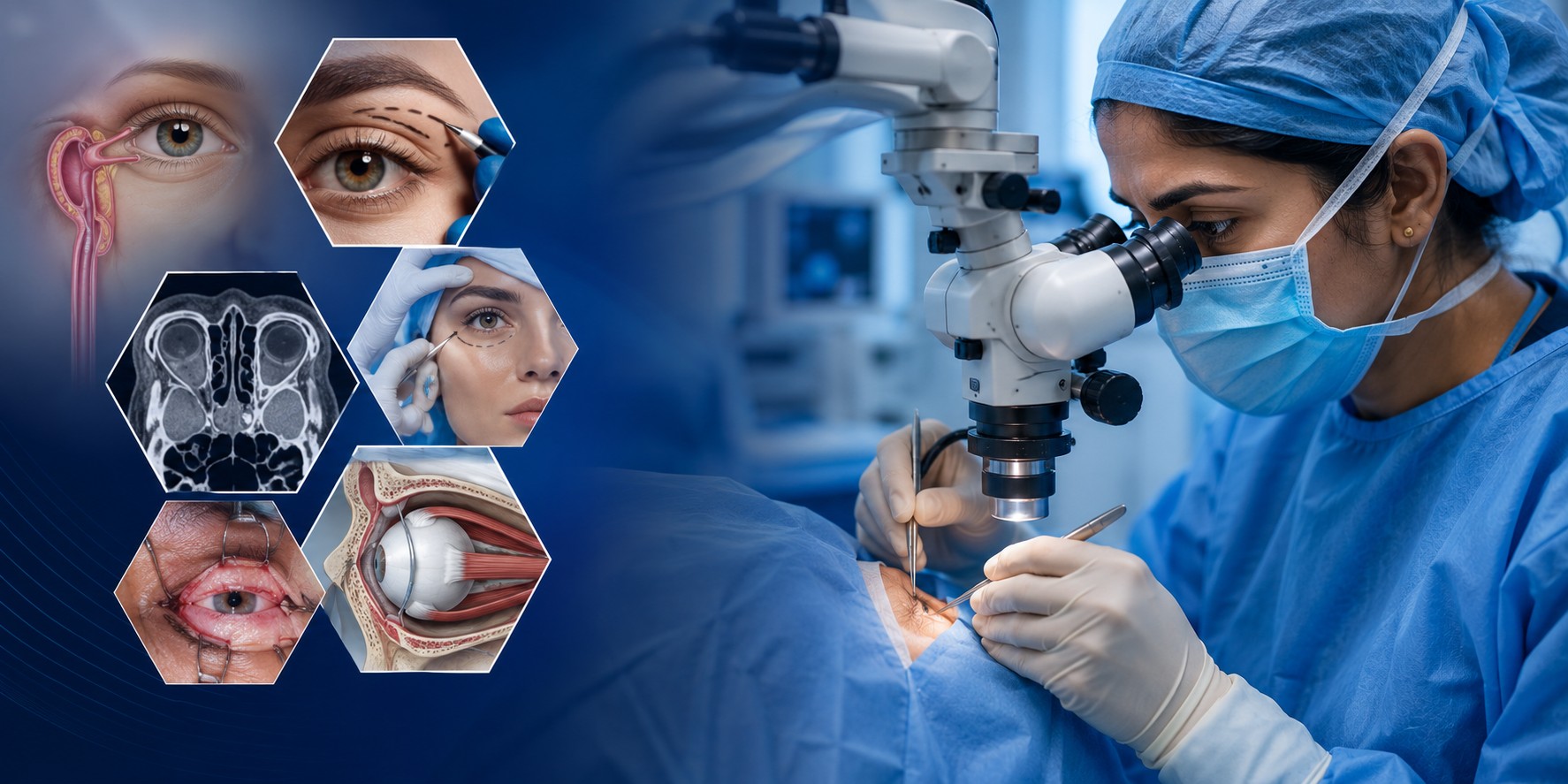
To train competent ophthalmologists in the comprehensive evaluation, medical management, and surgical treatment of eyelid, lacrimal, orbital, and periocular disorders while fostering academic excellence and research.
Months 1–3: Foundation
- Oculoplastic anatomy and surgical principles
- OPD evaluation and documentation
- Clinical photography
- Minor OT procedures
- Wound repair and eyelid suturing
- Chalazion, cyst and lesion excision
- Botulinum toxin and filler principles
- Journal club and case presentations
Months 4–6: Eyelid Surgery
Ptosis evaluation and surgical planning
- Entropion and ectropion correction
- Blepharoplasty
- Eyelid reconstruction techniques
- Management of eyelid tumors
- Surgical assisting with gradual independent operating
- Weekly seminars and wet-lab training
Months 7–9: Lacrimal Disorders
- Epiphora evaluation
- Lacrimal irrigation and probing
- Dacryocystorhinostomy (External and Endoscopic observation)
- Canalicular injury repair
- Balloon procedures and stenting
- Lacrimal imaging
- Independent management of routine lacrimal cases
Months 10–12: Orbital Diseases
- Orbital imaging interpretation
- Thyroid eye disease
- Orbital inflammation and infections
- Orbital tumors
- Orbitotomy techniques
- Enucleation, evisceration and socket management
- Multidisciplinary clinics
Months 13–15: Advanced Oculoplasty
- Complex ptosis surgery
- Facial nerve palsy management
- Eyelid and facial trauma
- Anophthalmic socket reconstruction
- Orbital decompression exposure
- Cosmetic periocular procedures
- Independent surgical lists under supervision
Months 16–18: Consolidation
- Independent decision-making
- Management of complex referrals
- Teaching residents
- Research completion and manuscript submission
- National conference presentation
- Exit examination (theory, clinical and viva)
- Logbook completion and portfolio assessment
Months 19-24: Senior Residency
Academic Activities
- Daily ward rounds
- Weekly grand rounds
- Weekly journal club
- Weekly seminar
- Monthly mortality and morbidity meeting
- Wet laboratory sessions
- Research methodology and biostatistics
- Evidence-based medicine sessions
Research Requirements
- One original research publication submitted to a peer-reviewed journal.
- One oral or free paper presentation at a state or national conference.
- Maintenance of a logbook throughout the fellowship
Assessment
Quarterly formative assessment
- Six-monthly faculty appraisal
- Maintenance of professionalism and communication skills
- Final theory, clinical examination, viva voce, and logbook evaluation. Upon successful completion, the fellow will be competent to independently manage common and complex oculoplastic, orbital, and lacrimal disorders with sound surgical judgment and academic proficiency.