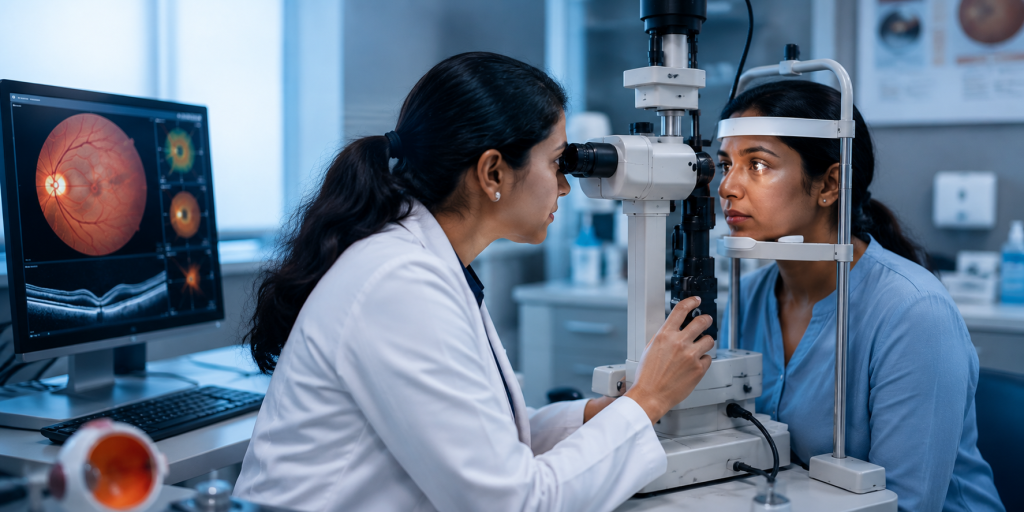
Welcome to the Fellowship in Cornea and Ocular Surface at Giridhar Eye Institute, Kochi.
We are delighted to have you join our academic community and embark on an intensive journey of subspecialty training in cornea, ocular surface, and anterior segment disorders. This fellowship has been carefully designed to provide comprehensive clinical, surgical, academic, and research experience, enabling fellows to develop into confident, ethical, and competent cornea specialists. The programme offers structured, competency-based training through close faculty mentorship, progressive surgical exposure, advanced diagnostic learning, and active participation in research and academic activities. Throughout the fellowship, emphasis is placed on developing sound clinical judgment, refining microsurgical skills, promoting evidence-based practice, and fostering independent decision-making while ensuring the highest standards of patient safety and professionalism. In addition to clinical excellence, fellows are encouraged to cultivate a spirit of inquiry, contribute to scientific research, participate in teaching activities, and embrace the values of compassion, integrity, teamwork, and lifelong learning. By the successful completion of this fellowship, graduates are expected to possess the knowledge, technical expertise, and professional attributes required to independently manage the full spectrum of corneal and ocular surface diseases and to deliver high-quality patient care in tertiary eye care institutions. We wish you a rewarding and enriching fellowship and look forward to supporting your growth into a skilled cornea specialist and future leader in ophthalmology.
A Few Words to Our Fellows
Your fellowship is more than a period of training—it is an opportunity to shape your future as a clinician, surgeon, researcher, and teacher. Make the most of every patient encounter, every surgery, and every discussion with your mentors.
Be a Dedicated Learner
- Take ownership of your learning and remain curious.
- Read regularly and integrate theory with clinical practice.
- Learn from every patient, every procedure, and every outcome.
Put Patients First
- Always prioritize the patient's well-being and safety.
- Treat every patient with empathy, dignity, and respect.
- Communicate honestly, clearly, and compassionately.
Develop Professionalism
- Be punctual, dependable, and accountable.
- Respect colleagues, faculty, nurses, technicians, and every member of the healthcare team.
- Accept feedback positively and strive for continuous improvement.
Build Surgical Excellence
- Observe carefully, practise consistently, and never hesitate to ask questions.
- Recognize that surgical expertise develops through patience, discipline, and repetition.
- Learn equally from successes and complications.
Work as a Team
- Support your fellow trainees and celebrate each other's achievements.
- Foster an environment of collaboration, integrity, and mutual respect.
- Remember that excellent patient care is always a team effort.
Aspire to Lead
- Lead by your actions, not by your position.
- Uphold the highest ethical standards in everything you do.
- Leave the programme as a better ophthalmologist and a better person than when you joined.
"Excellence is not achieved in a single day—it is built through consistent effort, humility, compassion, and a commitment to lifelong learning."
General Guidelines for Fellows
The fellowship is a period of intensive clinical and professional development. Fellows are expected to demonstrate commitment to learning, maintain high standards of professionalism, and actively participate in all clinical and academic activities.
Professional Expectations:
- Define Your Learning Goals
- At the beginning of each rotation, prepare a realistic learning plan outlining your objectives in clinical practice, diagnostics, surgical training, academics, and selfdirected reading.
- Discuss Objectives with Faculty
- Meet your supervising consultant before each posting to review your learning goals, understand the expectations of the rotation, and identify priority areas for development
- Seek Regular Feedback
- Schedule periodic meetings with your faculty mentor to review your progress, discuss challenges, and identify areas for improvement. Fellows are expected to take the initiative in arranging these meetings.
- Communicate Leave and Duty Commitments
- Inform your supervising consultant in advance regarding approved leave, emergency postings, on-call responsibilities, or any schedule that may affect your clinical duties.
- Utilize Faculty Mentorship
- Each fellow will be assigned a faculty mentor to provide guidance on academic, professional, and logistical matters. Regular interaction with your mentor is encouraged throughout the fellowship.
- Promote Open Communication
- Express your views respectfully and seek clarification whenever required. Fellows are encouraged to discuss clinical decisions, request guidance, and participate constructively in academic discussions.
- Professional Identification
- Institute identity cards must be worn prominently while on duty within the hospital premises.
- Punctuality
- Fellows are expected to report for duty by 8:00 AM or earlier if required by the consultant's outpatient clinic or operating theatre schedule. Timely attendance at all assigned duties is mandatory.
- Responsible Use of Mobile Devices
- Mobile phones should be used only when necessary and should never interfere with patient care, academic activities, or professional responsibilities.
- Electronic Devices
- Personal laptops, tablets, music players, or similar electronic devices should not be used in outpatient clinics or operating theatres unless specifically required for patient care, academic presentations, or institutional work.
Dress Code
Professional appearance reflects respect for patients, colleagues, and the institution. Fellows are expected to maintain appropriate attire at all times while on duty. The following dress code applies:
- Wear formal professional clothing during working hours.
- A clean white coat or apron, institutional identity card, and closed leather footwear are mandatory during clinical duties.
- Clothing such as jeans, T-shirts, casual wear, and sports shoes is not permitted during patient care activities unless specifically authorized for designated events.
Leave Policy
The fellowship is an intensive training programme, and regular attendance is essential for achieving the required clinical and surgical competencies.
- Fellows are entitled to the leave permitted under the institute's fellowship policy. Any leave exceeding the sanctioned entitlement may require extension of the fellowship to compensate for missed training.
- Normally, only one fellow from a unit may be on leave at any given time, subject to departmental requirements and continuity of patient care.
- Leave must be requested well in advance and requires prior approval from the supervising consultant. Fellows should ensure that patient care, academic responsibilities, emergency duties, and scheduled clinical activities are not adversely affected.
- Once approved, the leave application should be submitted to the Academic Office for documentation and inclusion in the fellow's official record.
- Fellows are encouraged to plan their leave judiciously and utilize it responsibly, keeping in mind the objectives and continuity of their training programme.
Fellowship in Cornea, Ocular Surface and Anterior Segment Programme Overview
The Fellowship in Cornea, Ocular Surface and Anterior Segment is a structured, competencybased subspecialty training programme with a total duration of 24 months. During the final three months, fellows who have demonstrated satisfactory clinical judgment, professional conduct, and the ability to independently evaluate and manage corneal disorders may be assigned responsibilities comparable to those of a junior consultant. This advanced clinical posting is granted only after successful assessment of the fellow’s performance throughout the preceding training period.
Program Philosophy
The fellowship is designed to develop ophthalmologists into skilled and compassionate cornea specialists capable of delivering comprehensive, evidence-based patient care. Training combines supervised clinical exposure, progressive surgical experience, advanced diagnostic techniques, academic learning, and research to ensure that graduates are competent in managing the full spectrum of corneal and ocular surface diseases. The program also aims to cultivate lifelong learning, ethical medical practice, effective communication, teamwork, and leadership qualities expected of subspecialty ophthalmologists working in tertiary eye care centers.
Program Objectives
On successful completion of the fellowship, the fellow should be able to:
- Independently evaluate patients presenting with corneal, ocular surface, and anterior segment disorders.
- Formulate accurate differential diagnoses and develop appropriate medical and surgical management plans.
- Competently perform essential diagnostic investigations and interpret their clinical significance.
- Safely perform commonly indicated corneal and anterior segment surgical procedures under an appropriate level of supervision, progressing towards independent practice.
- Recognize and manage intraoperative and postoperative complications using evidence-based approaches.
- Collaborate effectively with other ophthalmic subspecialties in the comprehensive management of complex ocular diseases.
- Participate actively in teaching, academic discussions, clinical audits, and research.
- Demonstrate professionalism, ethical conduct, patient-centred communication, and adherence to institutional quality and safety standards.
Core Areas of Training
Throughout the fellowship, structured exposure will be provided in the following domains:
Corneal Diseases
Comprehensive evaluation and management of infections, inflammatory and degenerative corneal disorders, dystrophies, inherited, traumatic, and ectatic corneal disorders. Training includes preoperative assessment, surgical planning, postoperative care, complication management, and clinical research.
Ocular Surface Disorders
Diagnosis and management of dry eye disease, limbal stem cell deficiency, ocular surface reconstruction, cicatrizing disorders, chemical injuries, and other complex ocular surface conditions using both medical and surgical approaches.
Corneal Imaging and Diagnostic Technology
Hands-on training in the operation, interpretation, and clinical application of contemporary diagnostic instruments used for assessment of the cornea and anterior segment, with emphasis on integrating imaging findings into clinical decision-making.
Anterior Segment Trauma
Evaluation and management of traumatic injuries involving the cornea and anterior segment, including emergency assessment, surgical intervention, and postoperative rehabilitation.
Ocular Microbiology and Pathology
Collection, handling, transportation, and interpretation of microbiological and histopathological specimens relevant to corneal infections and ocular surface disease, enabling evidence-based treatment decisions.
Refractive Surgery
Principles of refractive evaluation, patient selection, preoperative investigations, surgical techniques, postoperative care, and management of complications associated with refractive procedures.
CLINICAL RESPONSIBILITIES
- Outpatient Department (OPD) Responsibilities
- 1.1 Consultant-Led Outpatient Clinics
The outpatient clinic is the fellow's primary learning environment for developing diagnostic ability, clinical judgment, and patient management skills. Fellows are expected to participate actively in all consultant clinics and progressively assume greater responsibility under appropriate supervision. Responsibilities of the Fellow
- Pre-Clinic Briefing
- Before the commencement of each clinic, the fellow should meet the supervising consultant to review the day's schedule, discuss complex cases, and understand the specific learning objectives for that session.
- Comprehensive Clinical Assessment
- Fellows should independently evaluate assigned patients whenever appropriate.
- This includes obtaining a detailed history, reviewing previous medical records, performing a comprehensive ocular examination, and documenting findings accurately.
- Every new patient should undergo a complete ophthalmic examination, including slitlamp biomicroscopy, intraocular pressure assessment, dilated fundus evaluation, and indirect ophthalmoscopy whenever indicated.
- Fellows are expected to formulate a differential diagnosis and propose an evidencebased management plan before discussing the case with the consultant.
- Postoperative Patient Care
- Patients who have undergone surgery under the consultant's supervision should be reviewed during follow-up visits by the fellow.
- Clinical progress, visual outcomes, and postoperative complications should be carefully assessed and documented before consultant review.
- Clinical Decision-Making
- Fellows function as the first level of clinical support for the OPD team and should assist optometrists and nursing staff in managing patient flow and clinical decisions.
- Expected competencies include: o Performing gonioscopy whenever indicated. o Determining the safety and necessity of pupillary dilatation. o Recording detailed anterior segment findings. o Grading anterior chamber inflammation and lens changes. o Preparing accurate corneal diagrams. o Recommending appropriate ancillary investigations after consultation with the supervising faculty.
5. Specialized Corneal Evaluation
Depending on the clinical scenario, fellows should independently perform or supervise specialized investigations, including:
- Schirmer's test
- Tear Break-Up Time (TBUT)
- Corneal sensitivity assessment
- Ocular surface staining using fluorescein and Rose Bengal
- Other investigations required for the evaluation of ocular surface disease and dry eye.
- Office-Based Clinical Procedures As fellows progress through the programme, they are expected to acquire competence in a range of outpatient procedures under graded supervision. These include:
Corneal Scraping
Perform corneal specimen collection following institutional protocols for aseptic technique, documentation, laboratory requisition, and specimen transport.
Tissue Adhesive with Bandage Contact Lens Application
Learn the indications and technique for cyanoacrylate tissue adhesive application with placement of a bandage contact lens in cases such as corneal thinning, small perforations, or severe stromal melting.
Suture Removal
Safely remove corneal and ocular surface sutures following penetrating keratoplasty, corneal trauma repair, cataract surgery, or tarsorrhaphy using sterile "no-touch" technique with appropriate antimicrobial prophylaxis.
Tarsorrhaphy
Assist with and progressively perform temporary or permanent tarsorrhaphy in suitable patients under faculty supervision.
Examination Under Anesthesia (EUA)
Participate in examination and management of paediatric patients requiring EUA, including documentation and treatment planning.
Supratarsal Steroid Injection
Perform supratarsal corticosteroid injections for selected patients with severe palpebral vernal keratoconjunctivitis under faculty guidance.
Advanced Corneal Diagnostics
Although routine investigations are generally carried out by trained technicians, fellows should independently perform specialized imaging and photographic documentation whenever detailed clinical records are required for teaching, research, publication, or complex patient management.
- Operation Theatre (OT) Training
3.1 OT Posting
Operation theatre postings provide structured exposure to microsurgical techniques and perioperative patient management.
Fellows are expected to attend all operating sessions assigned to their supervising consultant as well as dedicated fellowship training lists. Attendance, punctuality, professionalism, and preparedness are essential components of surgical training.
As competence develops, fellows will progressively undertake increasing surgical responsibilities under appropriate faculty supervision.
3.2 Principles of Surgical Learning
Successful surgical training requires consistent preparation and deliberate practice. Fellows should:
- Observe every surgical procedure carefully and critically.
- Understand the rationale behind each surgical step.
- Clarify doubts with the operating surgeon after completion of surgery.
- Develop sound theoretical knowledge before attempting surgical procedures.
- Maintain patience and avoid rushing the learning process.
- Continuously refine both technical and non-technical surgical skills through regular practice and feedback.
3.3 Surgical Logbook
Every fellow must maintain an up-to-date electronic or written surgical logbook throughout the fellowship. The logbook should include:
- Patient identification number
- Diagnosis
- Surgical procedure performed
- Level of participation (observer, assistant, primary surgeon)
- Intraoperative complications
- Postoperative outcomes
- Faculty comments whenever applicable Fellows are also encouraged to maintain a portfolio of interesting cases, uncommon surgical techniques, and lessons learned from complex procedures.
3.4 Wet Lab Training
Regular wet lab practice forms an integral part of surgical skill acquisition. Fellows should routinely practise:
- Micro-suturing
- Tunnel construction
- Corneal wound closure
- Penetrating keratoplasty techniques
- Lamellar keratoplasty techniques Demonstration of adequate proficiency in the wet lab is mandatory before performing similar procedures in patients. Faculty assessment and constructive feedback should guide further improvement.
3.5 Responsibilities During Consultant Operating Lists
During consultant operating sessions, fellows should actively participate in all aspects of perioperative care. Their responsibilities include:
- Reviewing the operation list in advance.
- Understanding the diagnosis and surgical objectives for every patient.
- Performing preoperative slit-lamp evaluation where appropriate.
- Reviewing donor tissue quality and correlating findings with eye bank documentation.
- Completing surgical documentation accurately.
- Discussing unusual or challenging cases with faculty after reviewing relevant literature.
- Coordinating effectively with anaesthesia and nursing teams regarding patient-specific requirements.
4. Perioperative Patient Care
Preoperative Assessment Before surgery, fellows should ensure that:
- All investigations have been completed.
- Medical records are accurate and complete.
- Surgical indications have been confirmed.
- Informed consent has been obtained.
- Anaesthesia fitness has been documented.
- Special perioperative instructions have been communicated to the patient and nursing staff.
- Nil-per-mouth (NPO) instructions are appropriate whenever general anaesthesia is planned. Patients admitted before surgery should be reviewed personally to ensure adequate preparation and address any concerns. Postoperative Follow-Up Fellows should review all operated patients, preferably on the first postoperative day. Assessment should include:
- Visual status
- Ocular comfort
- Wound integrity
- Graft clarity (where applicable)
- Anterior chamber reaction
- Early postoperative complications
Any abnormal findings should be promptly communicated to the supervising consultant, and appropriate corrective measures should be initiated. Postoperative Ward Rounds Fellows assigned to the operation theatre should participate in postoperative ward rounds. Responsibilities include:
- Assessing the patient's systemic and ocular condition.
- Confirming that postoperative medications and instructions have been prescribed correctly.
- Ensuring documentation is complete.
- Addressing patient concerns and counselling them regarding postoperative care.
- Escalating unexpected clinical findings to the consultant without delay.
5. Emergency On-Call Responsibilities
During emergency duty, fellows serve as the first responder for ophthalmic emergencies involving admitted patients. Responsibilities include:
- Prompt assessment of emergency situations.
- Initiating immediate management within their level of competence.
- Consulting the appropriate physician, anaesthetist, or supervising ophthalmologist whenever required.
- Coordinating transfer to a higher-level medical facility when indicated.
- Accompanying critically ill patients during transfer whenever institutional policy requires.
- During after-hours duty, the on-call fellow should coordinate with other subspecialty fellows and consultants to ensure timely and appropriate patient care.
SURGICAL EXPOSURE AND PROCEDURAL COMPETENCIES
During the fellowship, trainees are expected to progressively acquire knowledge and technical proficiency in the diagnosis and surgical management of corneal and ocular surface disorders. Exposure to each procedure will be competency-based and will progress from observation to assisted surgery and, ultimately, independent performance under faculty supervision, depending on the fellow's level of training and demonstrated competence.
A. Tissue Adhesive Procedures
The fellow should gain experience in the indications, preparation, and application of tissue adhesives for the management of corneal thinning and perforations. Procedures include:
- Cyanoacrylate tissue adhesive application
- Fibrin glue application
B. Ocular Trauma Surgery
The fellowship provides comprehensive exposure to the evaluation and surgical management of anterior segment trauma. Core procedures include:
- Repair of corneal lacerations
- Repair of scleral lacerations
- Management of corneal perforations
- Removal of superficial and embedded corneal foreign bodies
- Removal of intracameral foreign bodies
C. Corneal Transplantation
Fellows will receive structured training in various forms of corneal transplantation and reconstructive surgery. Procedures include:
- Therapeutic Penetrating Keratoplasty (TPK)
- Tectonic Penetrating Keratoplasty
- Patch Graft Procedures
- Anterior Lamellar Keratoplasty (ALK)
- Descemet Stripping Endothelial Keratoplasty (DSEK)
- Descemet Membrane Endothelial Keratoplasty (DMEK)
D. Ocular Surface Reconstruction
Training includes medical and surgical rehabilitation of ocular surface disorders using contemporary reconstructive techniques. Procedures include:
- Amniotic Membrane Transplantation (AMT)
- Pterygium Excision with Conjunctival Autograft
- Limbal Biopsy
- Limbal Stem Cell Transplantation
- Keratoprosthesis Surgery (Observation and Selected Surgical Participation)
E. Additional Corneal and Anterior Segment Procedures
Fellows should become familiar with a variety of adjunctive procedures commonly performed in corneal practice. These include:
- Conjunctival Resection
- Superficial Keratectomy
- Scleral Deroofing
- Anterior Chamber Tap (AC Tap)
- EDTA Chelation for Band Keratopathy
- Alcohol-Assisted Epithelectomy The extent of hands-on surgical participation will depend on the fellow's competency level, faculty assessment, and individual learning progression.
ACADEMIC AND RESEARCH REQUIREMENTS
Academic development is an integral component of the fellowship programme. Fellows are expected to participate actively in educational activities, contribute to scientific research, and develop the skills necessary for lifelong learning and academic leadership.
1. Academic Activities
Attendance and active participation in all scheduled academic programmes are mandatory. These include:
- Case presentations
- Journal clubs
- Topic seminars and theory discussions
- Clinical-pathological meetings
- Faculty lectures
- Interdepartmental academic sessions
- Teaching sessions for optometry students and allied ophthalmic personnel, whenever assigned Fellows are expected to prepare thoroughly for each presentation and contribute meaningfully to academic discussions.
2. Research Requirements
Every fellow must successfully complete the minimum research requirements before completion of the programme.
These include:
- Two publishable case reports or small retrospective clinical studies.
- One major research project, which may be either a prospective clinical study or a large retrospective analysis. Fellows are encouraged to present their work at regional, national, and international scientific meetings and submit manuscripts to peer-reviewed journals.
3. Continuing Medical Education
Active participation in continuing professional development is expected throughout the fellowship.
Each fellow should regularly attend:
- Continuing Medical Education (CME) programmes
- Workshops
- Wet-laboratory training sessions
- Surgical skill courses
- Guest lectures and visiting faculty programmes
- Conferences and scientific meetings conducted by the institute Participation in these activities is considered an essential component of the overall assessment of the fellow's academic progress and professional development.